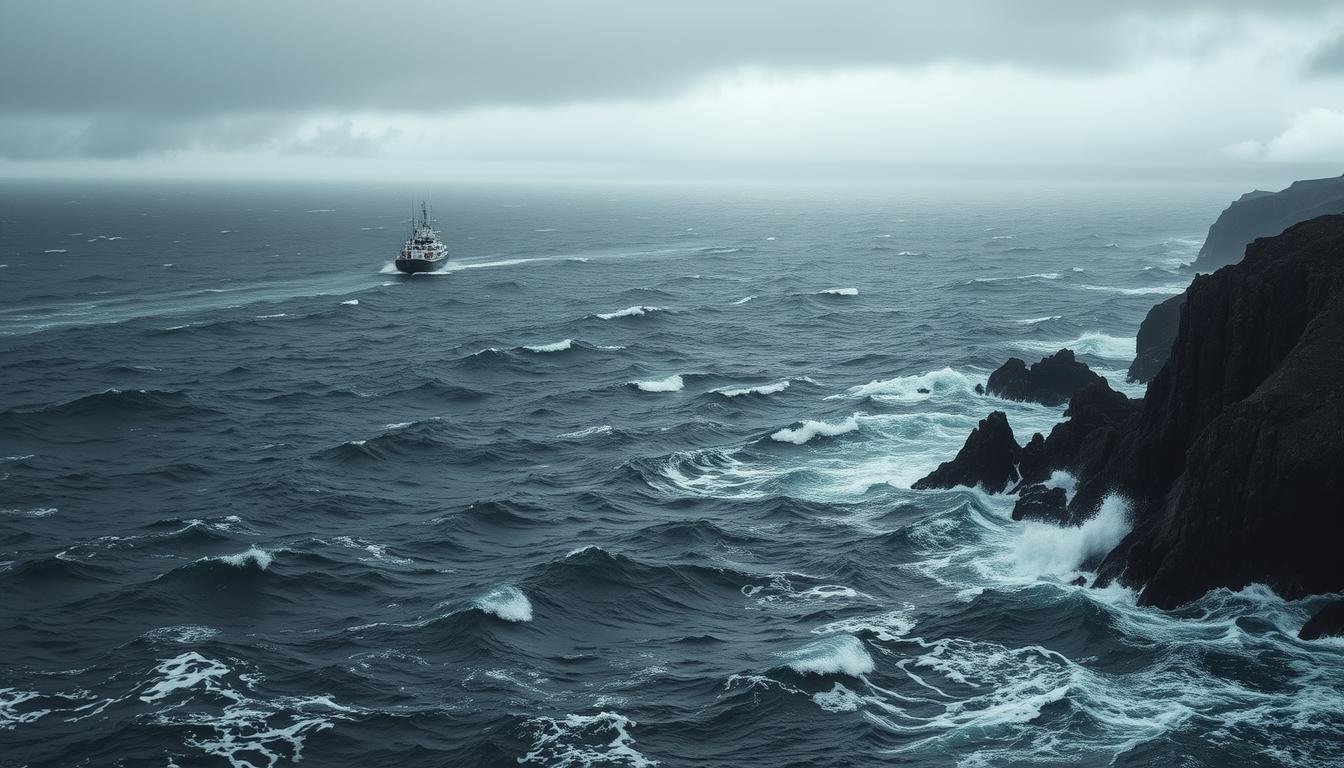

Dangers of the Bering Sea: Have you ever wondered about the dangers of the Bering Sea? It’s known for its extreme weather and unique geography. These factors make it one of the most dangerous seas globally.
When you start exploring the sea, knowing the risks is key. The Bering Sea faces unpredictable storms and icy waters. These dangers are very real.
Let’s dive into what makes the Bering Sea so dangerous. We’ll look at the factors that make it a tough place for sailors, fishermen, and explorers.
The Bering Sea: A Geographical Overview
Exploring the Bering Sea reveals its unique spot between Alaska and Russia. It spans about 2.3 million square kilometers, making it a large body of water.
The sea’s size and Arctic edge make its climate harsh. Its shallow shelves and deep basins are key to its ecosystem.
Climate and Oceanography
The Bering Sea’s climate is shaped by its northern location and Arctic waters. This leads to a subarctic climate with big seasonal changes. The sea’s oceanography features strong currents and the mixing of cold and warm waters. This supports a diverse marine life.
Knowing the Bering Sea’s geography and climate helps us understand its ecological importance. It also shows the challenges it faces in navigation and commerce.
Extreme Weather Conditions of the Bering Sea
The Bering Sea’s weather is known for being harsh and unpredictable. You will face extreme conditions that make it hard to navigate and carry out activities.
One key feature of the Bering Sea is its intense storms. These storms can grow fast, bringing high winds and huge waves. The damage to ships and structures can be severe.
Freezing Temperatures
Freezing temperatures are another danger in the Bering Sea. The cold air from the Arctic mixes with the warmer sea water, creating a dangerous climate. This causes severe icing on ships and gear, which can make them unstable and increase accident risks.
The table below shows the extreme weather you might encounter in the Bering Sea:
| Weather Condition | Impact | Precautions |
|---|---|---|
| Intense Storms | High winds, massive waves | Monitor weather forecasts, secure vessels |
| Freezing Temperatures | Severe icing on ships and equipment | Use anti-icing measures, ensure proper insulation |
| High Waves | Risk of vessel damage or capsizing | Use wave-dampening technologies, adjust navigation routes |
Knowing about these extreme weather conditions is key for safe travel and work in the Bering Sea. You must be ready for the tough challenges this environment offers.
Why Is the Bering Sea So Dangerous?
The dangers of the Bering Sea come from both nature and human actions. When you’re in this area, you face a mix of risks.
Extreme weather is a big part of the danger. The Bering Sea is hit by harsh storms, freezing temperatures, and dense fog. These make it hard to navigate.
Human actions also add to the risks. For example, overfishing has reduced fish numbers. This hurts the people who rely on fishing for their living.
- Commercial fishing increases the chance of accidents and deaths.
- Oil and gas exploration adds to the environmental and safety dangers.
- Shipping, like cargo vessels and tankers, is a threat to the sea.
Also, the lack of good infrastructure makes things worse. Not having enough rescue help and emergency plans can be a big problem.
To get why the Bering Sea is dangerous, you need to look at both nature and human actions. Knowing these risks helps us understand the challenges faced by those who work or travel there.
The dangers in the Bering Sea are complex. We need a full plan to reduce these risks. This includes rules, better infrastructure, and careful practices.
Wildlife Hazards in the Bering Sea
When you explore the Bering Sea, you’re not alone. The waters are home to many marine creatures, some of which can be dangerous. The Bering Sea is rich in species, including those that pose risks to humans.
Encounters with Wildlife
Exploring the Bering Sea might bring you face-to-face with sea lions, walruses, and whales. These meetings can be exciting, but it’s crucial to keep a safe distance. This helps avoid any dangers.
| Wildlife | Potential Danger | Safety Precaution |
|---|---|---|
| Sea Lions | Aggressive behavior if threatened | Maintain a safe distance |
| Walruses | Can be defensive if surprised | Approach with caution |
| Whales | Collisions possible if not aware | Be aware of surroundings |
The Bering Sea’s wildlife hazards are a significant aspect of its ecosystem. Knowing these dangers is key to safe exploration. By understanding the risks and taking precautions, you can enjoy the Bering Sea’s rich biodiversity safely.
Remember, respecting the Bering Sea’s wildlife is essential for a safe and fun trip. The dangers from marine life remind us of nature’s power and unpredictability.
The Perils of Commercial Fishing in the Bering Sea
Commercial fishing in the Bering Sea is fraught with dangers. The harsh marine environment, with extreme weather and icy waters, is a major risk. It poses dangers to both fishing vessels and their crews.
Severe weather, like storms and high winds, can damage or even sink fishing vessels. The risk of equipment failure is also high. Plus, the remote location of fishing grounds makes rescue operations tough.
Other dangers include the risk of hitting other vessels or icebergs. The physical strain on crew members working in extreme conditions is also a concern. The Bering Sea’s unique geography and climate make it a tough place for commercial fishing.
Safety Measures
To lessen these risks, the fishing industry has taken steps. Regular vessel inspections and mandatory safety equipment like life rafts and emergency beacons are in place. Crew members also go through rigorous training.
Thanks to better weather forecasting and communication tech, fishing vessels can better prepare for bad weather. Regulatory bodies enforce safety standards and protocols in the industry.
By knowing the dangers of commercial fishing in the Bering Sea and following safety measures, you can lower the risks. This challenging profession can be safer with the right precautions.
Notable Disasters and Incidents in the Bering Sea
The Bering Sea has seen many maritime disasters over the years. These events have had a big impact. They have taught the maritime industry a lot about the dangers of the sea.
In 2008, the fishing vesselAlaska Ranger was lost. This tragedy took five lives. It showed how crucial safety is in the fishing industry.
| Year | Incident | Consequences |
|---|---|---|
| 2008 | Loss of Alaska Ranger | 5 lives lost |
| 2015 | Fishing vessel Destination sinks | 6 lives lost |
| 2017 | Fishing vessel Stellar Sea incident | Damage to vessel |

These incidents have taught the maritime industry a lot about safety and being prepared. It’s clear that following safety rules is very important. It saves lives in the Bering Sea’s tough environment.
Learning from these historical incidents helps us understand the need for constant safety awareness in the Bering Sea.
Conclusion: Dangers of the Bering Sea
The Bering Sea is a powerful natural place that needs respect. Its harsh weather, dangerous wildlife, and fishing dangers make it tough to explore.
To stay safe, it’s important to be ready and take care. Know the weather, respect animals, and follow safety rules when fishing or doing other activities.
Future Precautions
When you go to the Bering Sea, remember to respect nature’s strength for safety. Stay updated, be prepared, and take steps to avoid risks. This way, you can have a safe and successful time in this special and hard place.
See Also: Uncovering the Dangers of the Flemish Cap Fishing Area
FAQ
What makes the Bering Sea one of the most hazardous bodies of water in the world?
The Bering Sea is hazardous due to its extreme weather. This includes intense storms, high waves, and freezing temperatures. Its remote location and harsh climate also add to the danger.
What are the risks associated with commercial fishing in the Bering Sea?
Commercial fishing in the Bering Sea is risky. Fishermen face harsh weather, equipment failure, and wildlife encounters. It’s crucial for them to take safety measures to reduce these risks.
What kind of wildlife hazards can be found in the Bering Sea?
The Bering Sea has a wide variety of wildlife. This includes marine mammals and fish that can be dangerous to humans. They can attack or entangle people.
What can be learned from notable disasters and incidents in the Bering Sea?
Notable disasters in the Bering Sea show the importance of safety and preparedness. They highlight the need for caution and respect for nature in this region.
How does the geography of the Bering Sea contribute to its harsh climate?
The Bering Sea’s location between Alaska and Russia makes its climate harsh. Cold water and ice from the Arctic Circle affect its weather.
Find out more about Discover Why the Appalachian Mountains Are Dangerous at Night.

Lorenzo Sloan is a safety advocate from Los Angeles who exposes hidden and everyday dangers through research-based blogging. With a background in social work, he aims to keep readers informed, cautious, and prepared for the unexpected risks around them.