
How Dangerous Is a Room With No Vents?
A Comprehensive Guide to Indoor Air Quality Risks
Yes, a room with no vents is dangerous due to the rapid buildup of indoor air pollutants, humidity, and carbon dioxide (CO₂). Without adequate ventilation, such a space can become a health hazard, leading to respiratory issues, mold growth, and increased exposure to volatile organic compounds (VOCs). This article examines the risks of unventilated rooms, identifies vulnerable populations, and provides practical solutions to improve air quality and safety.
Why Ventilation Is Critical for Indoor Air Quality
Ventilation is the process of exchanging stale indoor air with fresh outdoor air. It serves three essential functions:
- Removing Pollutants: Vents expel contaminants like VOCs from paint, cleaning supplies, and furniture; carbon dioxide from human respiration; and odors.
- Controlling Humidity: Proper airflow prevents moisture buildup from breathing, cooking, and bathing, which is the primary cause of mold growth.
- Regulating Oxygen Levels: Ventilation replenishes oxygen and dilutes CO₂, which can cause drowsiness, headaches, and impaired cognitive function at elevated concentrations.
Rooms without any form of ventilation—such as supply/return HVAC vents, windows, or exhaust fans—fail to perform these functions, turning into a closed system where pollutants accumulate to dangerous levels.
Health Risks of a Room With No Vents
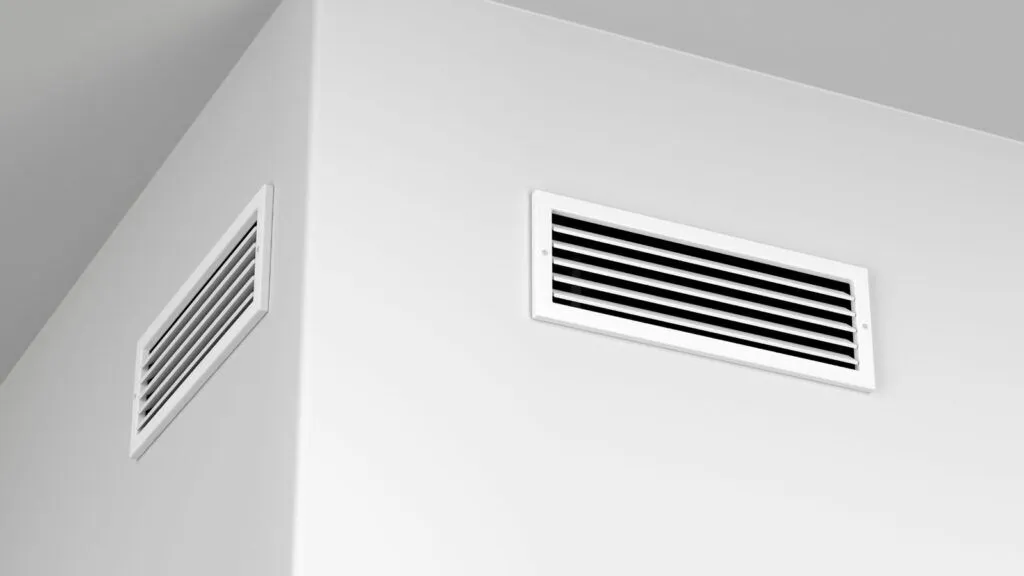
The dangers of an unventilated room are significant and can impact health in both the short and long term.
1. Carbon Dioxide (CO₂) Buildup
In a sealed room occupied by one or more people, CO₂ levels can rise rapidly. While CO₂ is not toxic at low levels, concentrations above 1,000 parts per million (ppm) can cause drowsiness and poor concentration. Levels exceeding 2,000 ppm often lead to headaches, dizziness, and significant cognitive impairment. In extreme cases with no air exchange (e.g., a small, sealed home office), CO₂ can reach 3,000-4,000 ppm after just a few hours, causing severe discomfort and nausea.
2. Mold and Mildew Growth
Without ventilation, humidity from breathing, sweating, and ambient moisture has no escape. When relative humidity consistently stays above 60%, it creates the perfect environment for mold spores to germinate and grow. Mold growth on walls, ceilings, or in carpets releases spores and mycotoxins into the air. Exposure can cause:
- Allergic reactions (sneezing, runny nose, red eyes)
- Asthma attacks in susceptible individuals
- Respiratory infections and chronic sinusitis
- In severe cases, toxic effects from mycotoxins
3. Accumulation of Volatile Organic Compounds (VOCs)
Modern homes are filled with materials that off-gas VOCs. In a room with no vents, these compounds become trapped and concentrate. Common sources include:
- Plywood, particleboard, and laminated furniture (formaldehyde)
- Paints, varnishes, and solvents (benzene, toluene)
- Cleaning products and air fresheners (aerosols, chemicals)
- New carpets and upholstery
Prolonged exposure to high levels of VOCs is linked to headaches, liver and kidney damage, and even an increased risk of cancer.
4. Increased Radon Risk (In Basements)
For below-grade rooms like basements, a lack of ventilation presents an additional danger: radon gas accumulation. Radon is a radioactive, odorless gas that seeps into homes from the ground. It is the second leading cause of lung cancer after smoking. A ventless basement can allow radon to reach dangerously high concentrations.
Who Is Most at Risk?
Certain populations are more vulnerable to the effects of poor air quality:
- Infants and Children: Their respiratory systems are still developing, and they breathe more air relative to their body weight.
- The Elderly: Often have pre-existing respiratory or cardiovascular conditions.
- Individuals with Asthma or Allergies: Are highly sensitive to mold spores, dust mites, and VOCs.
- People with Chemical Sensitivities: Can have severe reactions to low levels of VOCs that others may not notice.
Identifying a Room With Insufficient Ventilation
How can you tell if a room is dangerously unventilated?
- Persistent Stuffy or Stale Air: The air feels thick and smells musty.
- Condensation: Constant foggy or wet windows are a clear sign of excess humidity.
- Visible Mold Growth: Appears as black, green, or white speckled patches on walls, ceilings, or corners.
- Health Symptoms: You or others consistently experience headaches, dizziness, or congestion that improves upon leaving the room.
- HVAC System: The room has no cold air return vent, making it dead air space where air doesn’t circulate.
Solutions for a Room With No Vents
You can make a windowless or ventless room safer through several effective strategies:
1. Mechanical Ventilation (Most Effective)
- Install an Exhaust Fan: For rooms like bathrooms or laundry rooms, a ceiling- or wall-mounted exhaust fan that vents to the outside is the best solution.
- Add an HVAC Vent: Consult an HVAC professional to see if you can extend your home’s ductwork to supply and return air from the neglected room. This is often the most integrated solution.
- Use an Energy Recovery Ventilator (ERV) or Heat Recovery Ventilator (HRV): These systems efficiently exchange stale indoor air with fresh outdoor air while preserving the indoor temperature, making them ideal for tightly sealed homes.
2. Air Purification
A high-quality air purifier with a HEPA filter can capture particulate matter like dust, pollen, and mold spores. A unit with an activated carbon filter is essential for adsorbing VOCs and chemicals. While an air purifier does not remove CO₂ or introduce oxygen, it significantly reduces other pollutant risks.
3. Natural and Passive Ventilation
- Use a Door Vent or Transfer Grille: Installing a louvered vent or grille in the door or wall allows air to passively circulate into the hallway, where it can be handled by the home’s central HVAC system.
- Keep the Door Open: Simply keeping the door open as much as possible prevents the room from becoming a completely sealed environment.
- Use Fans: Placing a fan in the doorway to pull air out of the room and into a ventilated area can help promote circulation.
4. Dehumidification
In damp climates or basements, using a standalone dehumidifier is critical. Maintaining indoor humidity between 30-50% will drastically inhibit mold growth and make the room feel more comfortable.
When Is a Ventless Room Acceptable?
Not every unventilated space is a immediate crisis. A small, rarely used storage closet, for example, poses little health risk because people don’t spend enough time in it to be affected by the stagnant air. The danger is greatest in rooms where people sleep, work, or spend several consecutive hours, such as:
- Home offices
- Bedrooms
- Basement apartments
- Bathrooms
- Laundry rooms
Key Takeway: A Room With No Vents Is a Significant Health Hazard
A room with no vents is dangerously unhealthy for regular occupancy. It traps CO₂, allows humidity and mold to flourish, and concentrates harmful VOCs, leading to a range of health problems from cognitive impairment to respiratory illness. The solution is to create airflow and purification through mechanical ventilation, air purifiers, dehumidifiers, or passive ventilation techniques. Prioritizing proper air exchange is not just a matter of comfort—it is a critical investment in your long-term health and well-being. If you suspect a room in your home has poor ventilation, taking proactive steps to address it can significantly improve your indoor air quality and safety.
Here’s an interesting read on Auto Draft.

Lorenzo Sloan is a safety advocate from Los Angeles who exposes hidden and everyday dangers through research-based blogging. With a background in social work, he aims to keep readers informed, cautious, and prepared for the unexpected risks around them.