Dangers of the Flemish Cap Fishing Area: As you explore the world’s most significant fishing grounds, you come across the Flemish Cap. This region is known for its rich fishing history.
This area is also notorious for its treacherous conditions. It poses significant risks to commercial fishermen. Located in the North Atlantic, the Flemish Cap fishing area faces harsh weather patterns and unpredictable sea conditions.
Understanding the dangers of this region is crucial for those in the fishing industry. By looking at historical incidents and current safety measures, you’ll learn why this area is challenging and hazardous for fishermen.
The Flemish Cap: Location and Significance
The Flemish Cap is a unique underwater plateau. It’s found about 560 kilometers east of Newfoundland, Canada, in the North Atlantic Ocean. It’s famous for its rich fishing grounds.
The area’s geography leads to upwelling of nutrient-rich waters. This makes it perfect for many marine life species.
The Flemish Cap is important for the marine ecosystem. Its unique shape helps mix ocean currents. This supports a wide variety of fish species.
This makes it a key fishing spot, drawing fishermen from everywhere.
Knowing about the Flemish Cap’s location and importance is key. Its remote and harsh marine environment make it infamous. Fishermen need to be ready for its unique challenges.
The Flemish Cap’s isolation and unique shape make it both valuable and dangerous for fishing. Its role in the fishing industry is clear. The challenges it presents show the bravery and resilience of those who fish there.
Why Is the Flemish Cap So Dangerous?
Have you heard the Flemish Cap is a risky fishing spot? Let’s dive into why. Its dangers come from its unique shape and the harsh weather it faces.
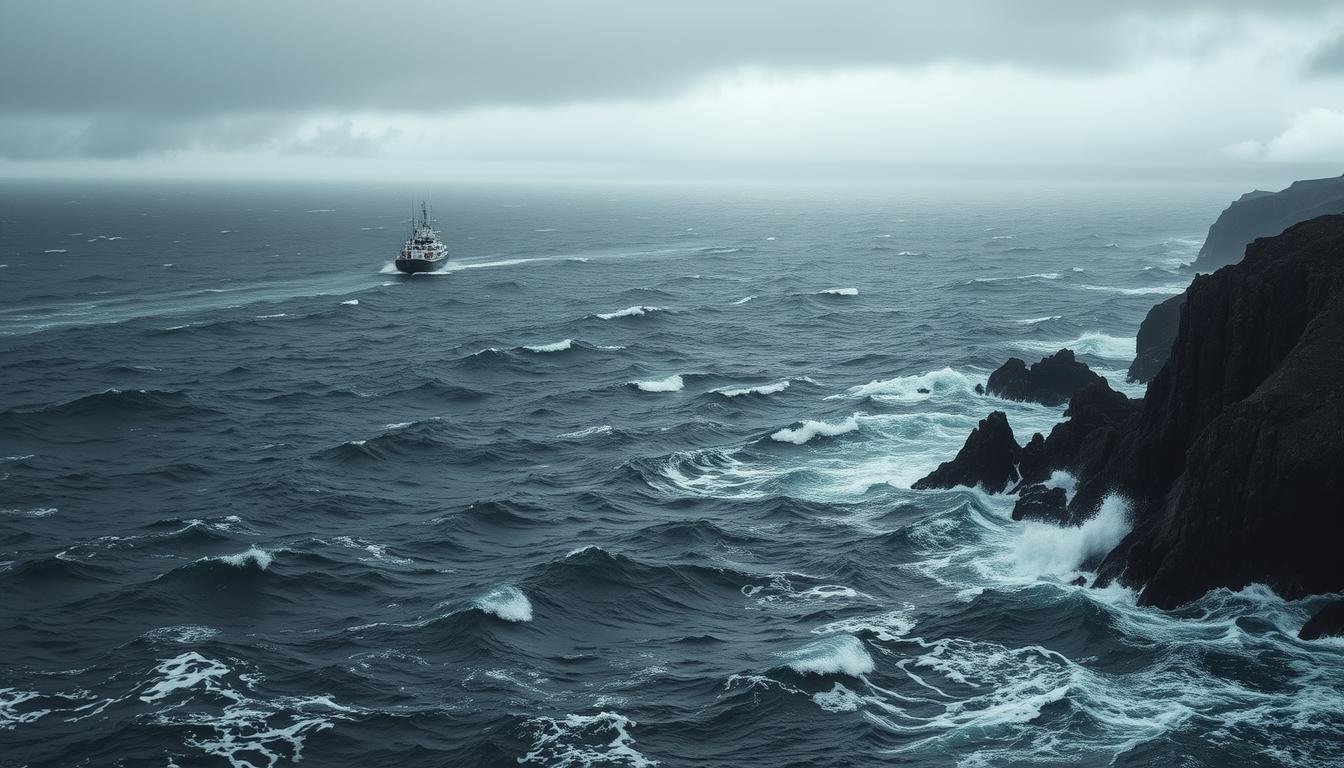
Rogue waves are a big reason the Flemish Cap is dangerous. These huge waves can surprise ships, causing harm or even sinking them. They happen because of storms and ocean currents.
The Flemish Cap, in the North Atlantic, is hit hard by these waves. This makes it a very risky place for ships.
Rogue waves form when wind waves, ocean swells, and sea floor shapes meet the right way. This can create waves much taller than others, threatening ships.
Seasonal Danger Variations
The Flemish Cap’s danger changes with the seasons. Weather and sea ice can make it even riskier at times. For example, winter brings strong winds and big waves, making it harder to navigate.
Knowing when it’s safe to sail is key. This helps avoid accidents in the Flemish Cap.
Sea ice in winter adds more danger. It’s hard to spot and can be a big risk for ships. Mariners need to stay informed about ice conditions to stay safe.
Notorious Weather Patterns of the Flemish Cap
The Flemish Cap is known for its severe weather. It’s in the North Atlantic, where storms and dense fog are common. These weather conditions can make navigation and fishing hard.
Strong winds and high waves are common here. The combination of these factors can lead to hazardous conditions. Knowing the weather is key for safe operations.
Weather on the Flemish Cap affects navigation a lot. Strong winds and waves make it hard to stay on course. Fog or snow can make it almost impossible to see.
Fishing is also tough because of the weather. Unpredictable weather can change plans, leading to lost time and money. The safety of the crew is a big worry.
To stay safe, it’s important to know the weather forecast. Having a plan for bad weather is crucial. Understanding the Flemish Cap weather patterns helps prepare for the challenges of fishing there.
Historical Disasters in the Flemish Cap Waters
The Flemish Cap fishing area has seen many maritime disasters. These have caused a lot of loss of life and property. The harsh marine environment has led to many tragic incidents over the years.

Looking back at these disasters, we can learn a lot. Past tragedies show us how crucial safety measures and emergency preparedness are. They also teach us to respect the sea’s power.
Lessons Learned from Past Tragedies
The fishing industry has learned key lessons from these disasters. First, the need for strong safety protocols is clear. Vessels must have the right safety gear and emergency plans.
- Keeping vessels and equipment in good shape is vital to avoid accidents.
- Crews need thorough training to deal with emergencies well.
- It’s important to watch the weather to avoid bad conditions.
Also, the history of these disasters shows the need for ongoing safety improvements. By learning from past incidents, the fishing industry can lower the risk of future tragedies.
In summary, the disasters in the Flemish Cap waters remind us of the dangers of fishing there. By understanding these events and the lessons they teach, we can see why safety and preparedness are so important in maritime operations.
Safety Measures and Precautions for Flemish Cap Fishing
To stay safe while fishing in the Flemish Cap, knowing the safety steps is key. New tech has made maritime safety better, especially in tough places like the Flemish Cap.
Today’s ships have top-notch navigation and weather tools. These help them get ready for bad weather. Knowing how to use these tools can lower the risks of fishing in the Flemish Cap.
- Regular maintenance of vessels to prevent mechanical failures
- Utilization of advanced weather forecasting systems to predict and prepare for severe weather conditions
- Implementation of rigorous safety training for crew members
- Use of personal protective equipment (PPE) to minimize injury risks
Modern Technology and Safety Improvements
New tech has changed safety in Flemish Cap fishing. Tools like GPS, emergency beacons, and better communication systems help ships stay safe and handle emergencies well.
Some key safety tech includes:
- Satellite-based navigation systems for precise location tracking
- Advanced radar systems for detecting other vessels and obstacles
- Automated External Defibrillators (AEDs) and other medical emergency response equipment
By using these safety steps and tech, fishermen can make fishing in the Flemish Cap safer. This ensures a safer job for everyone on the crew.
Conclusion: Dangers of the Flemish Cap Fishing Area
You now know how important and dangerous the Flemish Cap fishing area is. Its unique geography and harsh weather make it tough for fishing. By knowing the risks and taking safety steps, you can fish there safely.
It’s vital to respect the Flemish Cap for safe fishing. Knowing, being ready, and respecting the sea’s power help avoid dangers. When you go to the Flemish Cap, knowing its dangers is the first step to a safe trip.
In conclusion, the Flemish Cap needs respect. Knowing its weather, past disasters, and taking safety steps helps avoid risks. Your safety depends on respecting the Flemish Cap’s power.
See Also: Why Are Snake Eyes Piercings Dangerous?
FAQ
What is the Flemish Cap, and where is it located?
The Flemish Cap is an underwater plateau. It’s found about 560 kilometers (350 miles) east of Newfoundland, Canada. It’s in the North Atlantic Ocean.
Why is the Flemish Cap considered a hazardous fishing area?
It’s hazardous because of its unique geography and harsh weather. There have also been incidents like rogue waves and sea ice.
What are rogue waves, and how do they form?
Rogue waves are unusually high and powerful. They can form from storm conditions and ocean currents.
What can be learned from historical incidents in the Flemish Cap?
Past tragedies teach us the importance of safety and emergency plans. They give us insights into the dangers of the Flemish Cap.
How does the danger posed by the Flemish Cap vary by season?
Danger levels change with the seasons. Some times are more risky than others because of weather and sea ice.
What role does modern technology play in improving safety in the Flemish Cap?
Modern tech, like navigation and weather tools, helps predict and prepare for dangers. It makes maritime operations safer.
You’ll be interested in Why Dry Firing a Bow Can Be Dangerous?.

Lorenzo Sloan is a safety advocate from Los Angeles who exposes hidden and everyday dangers through research-based blogging. With a background in social work, he aims to keep readers informed, cautious, and prepared for the unexpected risks around them.