Why the Sun is More Dangerous During an Eclipse? A solar eclipse is a breathtaking sight, but it’s also risky for your eyes. During this rare event, the moon blocks the sun, making it seem safer to look directly at it. But this is a big mistake.
The sun’s rays are more dangerous during an eclipse. Normally, the sun’s brightness stops us from staring at it. But during an eclipse, the light is less, and our pupils get bigger. This makes us more vulnerable to the sun’s harmful ultraviolet rays. It’s important to know about eclipse risks to protect our eyes.
Contents
- 1 The Science Behind Solar Eclipses
- 2 Why Is the Sun More Dangerous During an Eclipse?
- 3 The Specific Dangers to Your Eyes
- 4 Common Misconceptions About Eclipse Viewing
- 5 Safe Eclipse Viewing Methods
- 6 Conclusion: Why the Sun is More Dangerous During an Eclipse?
- 7 FAQ
- 7.1 What makes the sun’s rays more hazardous during a solar eclipse?
- 7.2 What is solar retinopathy?
- 7.3 How can I safely view a solar eclipse?
- 7.4 How do I verify the certification of eclipse glasses?
- 7.5 Can I use regular sunglasses to view a solar eclipse?
- 7.6 What are pinhole projectors, and how do they work?
The Science Behind Solar Eclipses
Solar eclipses happen when the moon blocks the sun’s light for our planet. This is called a syzygy. The moon’s shadow has two parts: the umbra, where the sun is hidden, and the penumbra, where the sun is partly seen.
There are three kinds of solar eclipses: partial, annular, and total. A partial eclipse shows the moon covering part of the sun. An annular eclipse shows a ring of light around the moon because it’s too far away. A total eclipse is the most amazing, where the moon blocks the sun’s light, showing the sun’s corona.
Learning about solar eclipses makes them more special. It also reminds us to stay safe, especially to avoid eclipse eye damage. Since solar eclipses are rare, we must plan carefully to watch them safely.
Why Is the Sun More Dangerous During an Eclipse?
When the moon blocks the sun, it can be very dangerous for people watching. During a solar eclipse, the moon’s shadow makes the sun seem less bright. But this is not a safe sign.
The moon’s shadow makes it easier to look at the sun without feeling its usual brightness. This can lead to a false sense of security. People might take off their protective eyewear or stare at the sun without protection.
The sun’s corona becomes visible during an eclipse, making it seem safe to look at the sun. But the sun’s UV and IR radiation are still harmful. UV radiation can damage the retina, causing vision problems or even blindness.
To safely watch an eclipse, it’s important to follow eclipse safety tips. Use solar viewing glasses or handheld solar viewers that meet international safety standards. These devices make the sun’s brightness safe for viewing, so you can enjoy the eclipse without eye harm.
- Always use solar viewing glasses or handheld solar viewers that comply with ISO 12312-2 standards.
- Never look directly at the sun or an eclipse without proper eye protection.
- Use a pinhole projector to indirectly view the eclipse if you don’t have solar viewing glasses.
Knowing why the sun is more dangerous during an eclipse is key to protecting your eyes. By taking the right precautions and following safety rules, you can enjoy this rare event without risking your vision.
The Specific Dangers to Your Eyes
Looking at a solar eclipse without the right protection can hurt your eyes badly. This includes a condition called solar retinopathy. It happens when the sun’s UV rays damage the retina, leading to blind spots or vision loss.
The sun’s rays are so strong that they can harm you in just seconds. The intensity of the sun’s rays can be so great that it can cause harm in a matter of seconds. Since the retina doesn’t have pain receptors, you might not feel anything even as it’s getting damaged.
Solar retinopathy can cause serious and lasting vision problems. Symptoms include distorted vision, blind spots, or changes in color. In the worst cases, it can lead to vision loss. It’s important to know that these injuries can happen even with short exposure to the sun during an eclipse.
To understand the risks, consider these:
- Solar retinopathy, a condition that can cause permanent damage to the retina.
- Cataract formation due to prolonged exposure to UV radiation.
- Damage to the cornea, potentially leading to vision distortions.
Knowing these risks shows why it’s key to use the right eye protection during an eclipse. By taking the right steps, you can enjoy this rare event while keeping your eyes safe.
Common Misconceptions About Eclipse Viewing
Solar eclipses are often misunderstood, which can be dangerous. Many think it’s safe to glance away or use regular sunglasses. But these methods don’t protect your eyes well.
Some believe looking through a telescope or binoculars is safe with a filter. But, only special solar viewing filters work, and they must be attached right.
Another myth is that certain eclipse phases are safer. The truth is, your eyes are always at risk when the sun is partly covered. Here are some myths and facts:
| Myth | Reality |
|---|---|
| Viewing an eclipse is safe if you look away periodically. | Looking directly at the sun, even briefly, can cause serious eye damage. |
| Ordinary sunglasses protect your eyes during an eclipse. | Only specialized solar viewing glasses or handheld solar viewers that meet international safety standards for solar viewers can protect your eyes. |
| It’s safe to view an eclipse through a telescope or binoculars with a filter. | The filter must be specifically designed for solar viewing and correctly attached to the device. |
Safe eclipse viewing practices are key to protecting your vision. Knowing the myths and facts lets you enjoy this rare event safely.
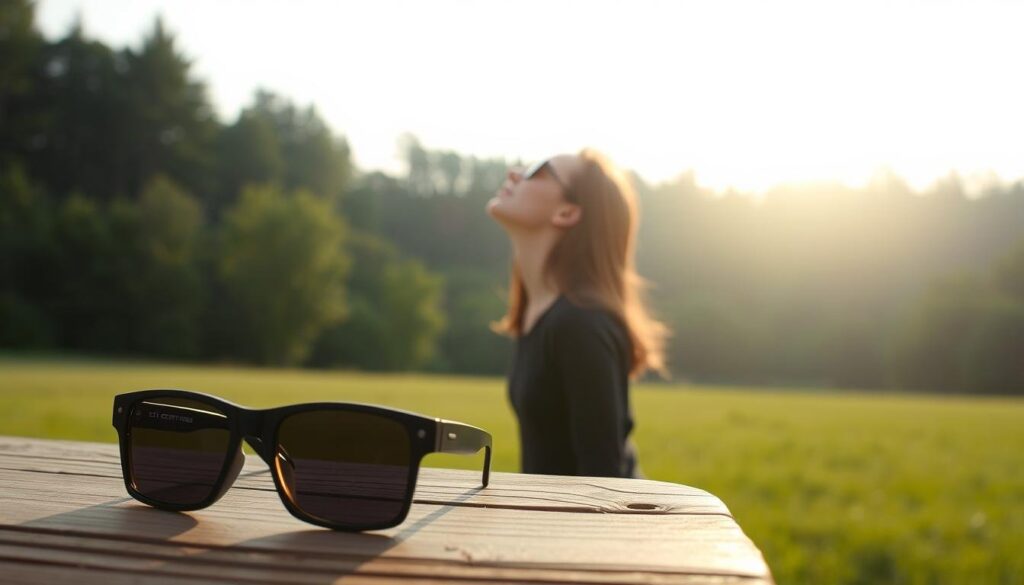
To safely view the eclipse, use special solar viewing glasses or handheld solar viewers that meet safety standards. Never look directly at the sun without proper eye protection.
Safe Eclipse Viewing Methods
Solar eclipses are amazing events that need safe watching. Looking directly at the sun can hurt your eyes badly. So, it’s key to watch it safely.
Make sure eclipse glasses or handheld solar viewers are certified. Look for the ISO 12312-2 safety standard. This means they’ve been tested and are safe for your eyes.
Proper Usage Guidelines
Follow the maker’s rules for using eclipse glasses or solar viewers. Check them for damage before you use them. If they’re scratched or torn, don’t use them. Always watch kids when they use these to make sure they’re safe.
Pinhole Projectors
A pinhole projector is a safe way to see the eclipse. Make one by poking a hole in cardboard. Hold it above a white sheet of paper to see the sun’s image. This way, you can watch the eclipse safely.
Other Safe Alternatives
There are more safe ways to see an eclipse. You can use a telescope or binoculars with a solar filter. These filters make the sun’s light safe to look at. Also, public viewing events have safe ways to watch the eclipse.
By using these safe ways, you can enjoy the solar eclipse without eye harm. Always choose safety to have a great time.
Conclusion: Why the Sun is More Dangerous During an Eclipse?
When the moon blocks the sun during an eclipse, it’s crucial to keep your eyes safe. Looking directly at the sun can cause serious eye damage. This is why it’s important to take the right steps to protect your vision.
Use certified solar viewing glasses or handheld solar viewers to watch the eclipse safely. These tools meet international safety standards. They let you see the eclipse indirectly, which is safer for your eyes.
By following these safe viewing tips, you can enjoy the eclipse without worrying about your eye health. Remember, an eclipse safety summary always stresses the need for eye protection. This way, you can fully appreciate this rare event without risking your vision.
See Also: Dangers of Squatted Trucks: What You Need to Know
FAQ
What makes the sun’s rays more hazardous during a solar eclipse?
The sun’s rays are more hazardous during a solar eclipse. This is because the moon’s shadow makes the sun appear less bright. It’s tempting to look directly at it without protection, which can harm your eyes.
What is solar retinopathy?
Solar retinopathy is a condition caused by looking directly at the sun without eye protection. It can happen during an eclipse. It can lead to serious and permanent vision damage.
How can I safely view a solar eclipse?
To safely view a solar eclipse, use certified eclipse glasses or handheld solar viewers. These must meet international safety standards. You can also use a pinhole projector to project the eclipse image onto a screen.
How do I verify the certification of eclipse glasses?
To verify the certification of eclipse glasses, look for a certification label. It should show compliance with international safety standards, like ISO 12312-2.
Can I use regular sunglasses to view a solar eclipse?
No, regular sunglasses are not safe for viewing a solar eclipse. They don’t protect against the sun’s intense ultraviolet and infrared radiation. This can cause serious eye damage.
What are pinhole projectors, and how do they work?
Pinhole projectors are devices for safely viewing a solar eclipse. They project the eclipse image onto a screen. This is done by using a small hole to project the sun’s image indirectly.
Read more about Why is Pacheco Pass So Dangerous?.

Lorenzo Sloan is a safety advocate from Los Angeles who exposes hidden and everyday dangers through research-based blogging. With a background in social work, he aims to keep readers informed, cautious, and prepared for the unexpected risks around them.