The Dangers of Whitefish Point? When you explore the Great Lakes, you might be drawn to Whitefish Point. It’s known for its dangerous waters and rich history. Located in Michigan’s Upper Peninsula, it has seen many Great Lakes shipwrecks and maritime disasters.
Visiting Whitefish Point comes with risks. Its rocky shores and strong currents make it infamous. Knowing these dangers is key for anyone interested in this place.
Learning about Whitefish Point’s dangers helps us value safety. It also lets us understand the history behind the maritime disasters there.
The Treacherous Waters of Whitefish Point
Whitefish Point’s unique geography and weather patterns make it a maritime hazard. It’s located on the northern tip of Michigan’s Upper Peninsula. Here, sudden fog can make visibility almost zero, making it very dangerous to navigate.
The waters around Whitefish Point also face powerful wind patterns. These winds can quickly make waves dangerous for vessels. Together, these factors make the area known for its treacherous waters.
Some of the specific hazards include:
- Strong currents that can pull vessels off course
- Rapid changes in weather that can catch mariners off guard
- Low visibility due to fog, making it difficult to navigate
It’s important to know these risks if you plan to go into these waters. By understanding the dangers and taking precautions, you can lower your risk of problems.
Why Is Whitefish Point So Dangerous?
Whitefish Point is known for its dangerous conditions. These have led to many maritime accidents over the years.
The area’s weather can change suddenly and unpredictably. This includes sudden fog that greatly reduces visibility.
Sudden Fog and Visibility Issues
Sudden fog at Whitefish Point can make visibility almost zero in minutes. This dense fog is very dangerous for sailors, making it hard to navigate.
Powerful Wind Patterns
Whitefish Point also faces strong winds. These winds can cause huge waves and strong currents. This makes navigation even harder and increases the risk of accidents.
The mix of sudden fog and strong winds makes Whitefish Point very hazardous. Sailors need to be very careful here because the weather can change fast.
Knowing about these dangers helps us understand why Whitefish Point is so risky. It also shows why safety measures are crucial to avoid accidents.
Historical Shipwrecks and Tragedies
Whitefish Point has seen many shipwrecks that fascinate historians and fans. Its dangerous waters and harsh weather make it infamous.
The 19th century was very hard for ships at Whitefish Point. Notable shipwrecks from that time include:
- The SS Steamer Michigan, lost in 1844
- The SS Comet, which sank in 1875
- The SS Indiana, wrecked in 1858
These events show the dangers of sailing the Great Lakes back then.
Modern-Era Incidents
Even with better safety today, Whitefish Point still sees maritime disasters. Some key incidents are:
- The sinking of the SS Carl D. Bradley in 1958
- The loss of the SS Edmund Fitzgerald in 1975, a famous Great Lakes shipwreck
These tragedies remind us of the dangers of the Great Lakes, even with today’s technology and safety.
The stories of these shipwrecks and disasters teach us about the need for safety and caution at Whitefish Point.
The Whitefish Point Lighthouse: Guardian Against Danger
The Whitefish Point Lighthouse has been a beacon of safety for over a century. It guides ships through dangerous shoals and rocky outcrops. These areas have sunk many vessels over the years.
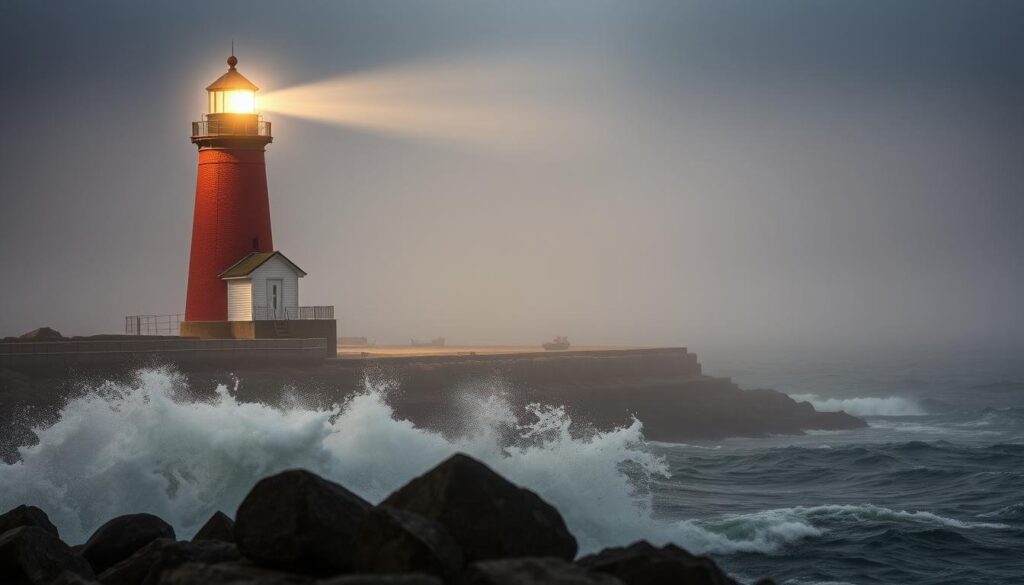
The Whitefish Point Lighthouse is very important. It warns mariners of dangers ahead. Its light and fog signal have saved many ships from wrecking.
Knowing the Whitefish Point Lighthouse’s role helps you stay safe. It shows the efforts to protect mariners and their ships. The lighthouse is a key part of maritime safety in the area.
Essential Safety Tips for Visitors
To fully enjoy Whitefish Point, knowing the safety guidelines is key. The area’s waters are treacherous, and the weather can change fast. Visitors must be ready for these challenges.
Spotting dangerous signs is your first defense. Watch the weather and water conditions closely. Storms can come quickly, making the waters rough. Stay alert to avoid risks.
What to Do in an Emergency
In an emergency, knowing what to do is crucial. Learn the emergency procedures at Whitefish Point. Find out where emergency services are and how to reach them.
Local Emergency Services
Whitefish Point has emergency services ready for various situations. Knowing they’re there can make your visit safer and more enjoyable.
Communication Tools and Weather Alerts
Staying informed is vital for your safety. Use communication tools and sign up for weather alerts. This way, you’ll always know the current conditions and can avoid dangers.
By following these safety tips and being aware of your surroundings, you can have a safe and fun visit to Whitefish Point. Safety is everyone’s responsibility. Being prepared ensures a great experience for all.
Staying Safe at Whitefish Point
Whitefish Point is known for its rich maritime history and dangers. The waters here have seen many shipwrecks and tragedies. To stay safe, it’s important to know the hazards and take precautions.
By understanding the dangers and following safety tips, you can enjoy Whitefish Point safely. The Whitefish Point Lighthouse has helped guide ships through these waters. Its history shows the importance of safety at sea.
When you visit Whitefish Point, be aware of your surroundings. Follow safety guidelines and respect nature’s power. This way, you can appreciate the location’s significance while staying safe from maritime disasters.
See Also: Why Dry Firing a Bow Can Be Dangerous?
FAQ: The Dangers of Whitefish Point
What makes Whitefish Point so hazardous for mariners?
Whitefish Point is dangerous because of its location and weather. It has sudden fog and strong winds.
How has the Whitefish Point Lighthouse contributed to safety in the area?
The Whitefish Point Lighthouse helps keep mariners safe. It guides them and warns of dangers.
What kind of emergencies might occur at Whitefish Point, and how can I prepare?
Emergencies include getting caught in fog and facing strong winds. Being ready means knowing emergency steps and having the right tools and alerts.
Are there local emergency services available at Whitefish Point?
Yes, local emergency services are ready to help in emergencies. Visitors should learn about these services before going out.
How can I stay informed about weather conditions at Whitefish Point?
Stay updated with weather alerts. Use radios or apps for the latest weather info.
What historical incidents have occurred at Whitefish Point?
Whitefish Point has seen many maritime disasters. This includes shipwrecks from the 19th century and recent incidents. It’s known for its dangerous reputation.
Learn more about Are Raw Potatoes Dangerous for Wildlife to Eat?.

Lorenzo Sloan is a safety advocate from Los Angeles who exposes hidden and everyday dangers through research-based blogging. With a background in social work, he aims to keep readers informed, cautious, and prepared for the unexpected risks around them.