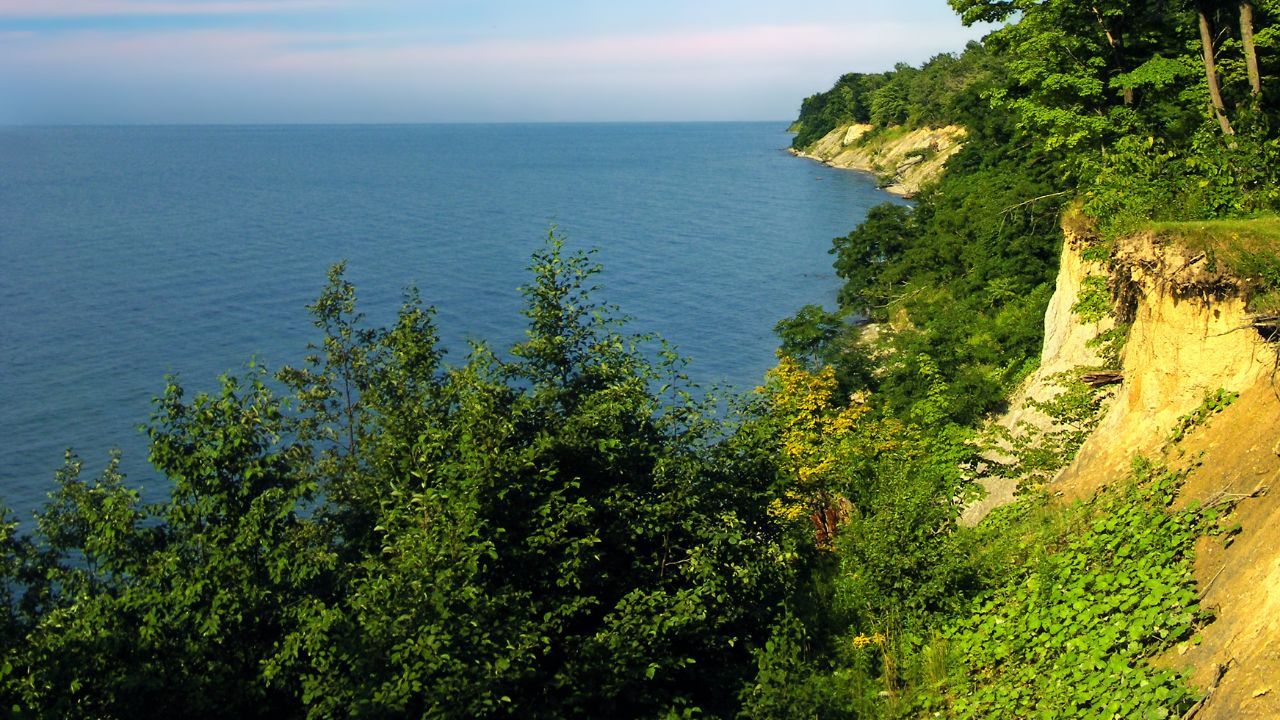
Why Is Lake Erie So Dangerous for Ships? Lake Erie—shimmering and majestic—is the fourth largest of the five Great Lakes, yet it has a fearsome reputation.
While many admire its beauty and use it for transportation, recreation, and commerce, few realize how dangerous these waters can be. With more than 2,000 shipwrecks scattered across its depths, Lake Erie has earned the title of one of the most treacherous bodies of water in North America.
Despite being the shallowest Great Lake, Lake Erie’s combination of natural features, volatile weather, and historical misfortunes has made it an infamous graveyard for ships. This article explores why Lake Erie is so perilous for navigation, what makes it unique, and how ships can fall victim to its deceptive charm.
Lake Erie at a Glance
Geographical Importance
Lake Erie stretches across approximately 241 miles and forms a natural border between the United States and Canada, touching the states of Ohio, Michigan, Pennsylvania, and New York, as well as the province of Ontario. It serves as a critical link in the Great Lakes–St. Lawrence Seaway system, allowing ships to move goods between the Atlantic Ocean and the interior of North America.
Historical Relevance
Throughout history, Lake Erie has played a significant role in commerce, migration, and warfare. It was a vital route for Indigenous peoples, early settlers, and traders. During the War of 1812, it hosted the famed Battle of Lake Erie. Later, it became central to industrial shipping, ferry services, and even smuggling operations during Prohibition. But its maritime legacy is also steeped in tragedy.
Why Is Lake Erie So Dangerous for Ships?
Shallow Depths Lead to Rougher Waters
Lake Erie’s average depth is only 62 feet, and its maximum depth is about 210 feet, making it the shallowest of the Great Lakes. This seemingly minor detail has massive consequences.
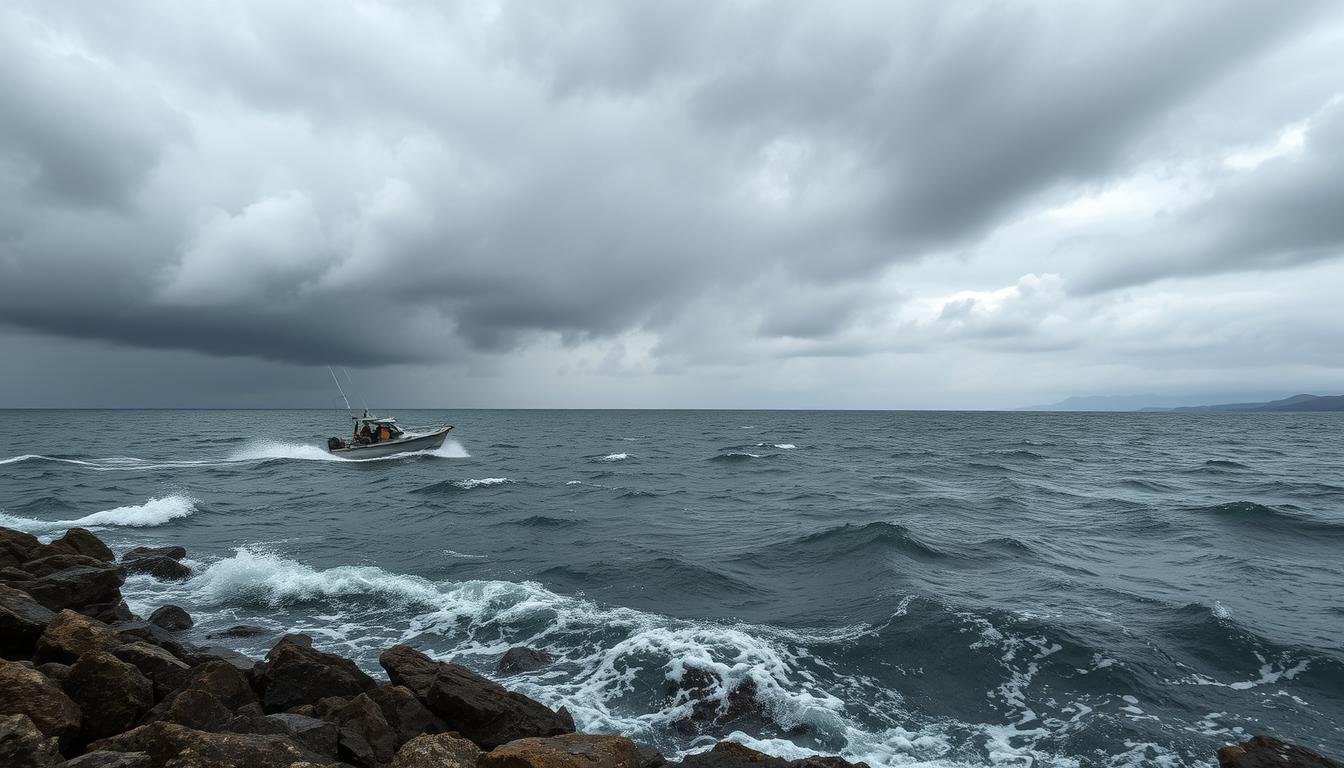
Shallow lakes can’t absorb the energy of wind as effectively as deeper bodies of water. This means that during storms, waves on Lake Erie build up quickly and crash violently—creating short, choppy conditions that can overwhelm vessels in minutes. Unlike deeper lakes, where waves have longer intervals and more predictable swells, Lake Erie’s waves are erratic and steep.
Rapidly Changing Weather
The Great Lakes are known for unpredictable weather, but Lake Erie tops the list. Its position allows for weather systems from the west, south, and north to collide, forming powerful storms. Especially in late fall, when cold Arctic air meets the still-warm lake surface, the conditions become explosive.
Storms can form with little warning, reducing visibility and pummeling ships with high winds and waves. In some tragic cases, vessels didn’t even have time to send distress signals before vanishing beneath the surface.
Treacherous Lakebed Conditions
The bottom of Lake Erie is rocky and uneven, with sudden depth changes and hidden ridges. These underwater hazards pose a serious threat to ships that venture too close to shorelines or unfamiliar areas.
In older times, before the availability of GPS and sonar, captains had to rely on rudimentary navigation techniques. Many ships were lost because they struck submerged rocks, shoals, or sandbars—especially during foggy or stormy conditions.
A Graveyard of Ships: Lake Erie’s Wreck History
Notable Disasters
Lake Erie’s history is marked by high-profile shipwrecks. One of the most infamous is the steamer Atlantic, which sank in 1852 off Long Point, Ontario, with an estimated 250 people dead. Another tragic incident was the SS G.P. Griffith, which caught fire in 1850, resulting in over 250 fatalities near Cleveland.
What’s shocking is the sheer number of shipwrecks—more than 2,000 documented losses have occurred on Lake Erie. Many of these vessels have never been found, lost forever in the lake’s murky waters.
Underwater Exploration and Preservation
In recent years, Lake Erie has attracted scuba divers, historians, and archaeologists fascinated by its submerged heritage. Dozens of wrecks are now popular diving sites, and some have become underwater museums, protected under U.S. and Canadian law. However, the fragile nature of these wrecks and the conditions in which they rest make exploration both exciting and dangerous.
Fog, Ice, and Limited Visibility
Lake Erie’s surface temperature and geographic location make it susceptible to dense fog, especially in spring and fall. Combined with unpredictable winds, fog can drastically reduce visibility, making navigation extremely difficult. Before the advent of radar, these conditions were particularly lethal.
In winter, ice formation adds another layer of risk. Ships can become trapped or damaged by thick ice sheets, and even modern vessels must sometimes rely on icebreakers to move safely.
Outdated Equipment and Overconfidence
Historically, many disasters occurred due to overconfidence in ship design or the underestimation of Lake Erie’s danger. Captains would press on despite storm warnings or overloaded their ships, increasing the chance of capsizing or mechanical failure under stress.
Before radar, sonar, and GPS, even experienced sailors could lose their bearings, especially when weather changed suddenly or landmarks were obscured.
Technological Improvements and Safety Efforts
Modern Navigation Tools
Today, advancements in technology have significantly improved maritime safety. GPS tracking, sonar imaging, and real-time weather forecasting allow ships to avoid many dangers that plagued their predecessors.
Additionally, ships now receive automatic alerts about water conditions, wind speeds, and visibility, giving crews time to adjust course or seek shelter.
Role of the Coast Guards
The U.S. and Canadian Coast Guards play a crucial role in maintaining Lake Erie’s safety. From conducting search and rescue missions to breaking up ice sheets in winter, these services are essential.
They also issue navigation warnings, weather alerts, and enforce safety protocols for both commercial and recreational vessels.
Legends and Lore of Lake Erie
The Lake Erie Triangle
Similar to the Bermuda Triangle, some refer to the area between Cleveland, Erie, and Long Point as the “Lake Erie Triangle.” Sailors have reported mysterious disappearances, compass malfunctions, and even sightings of ghost ships.
While many of these stories are anecdotal or based in folklore, they highlight the mystique and fear that Lake Erie has inspired over centuries.
Folklore of Haunted Ships
Some locals believe that the lake is haunted by the souls of lost sailors. Stories of phantom ships glowing in the mist, eerie sounds on foggy nights, and ghostly apparitions are passed down through generations. These tales, while unverifiable, add to Lake Erie’s reputation as both beautiful and sinister.
Conclusion
Lake Erie is a fascinating and vital body of water, but it demands respect. Its shallow depth, rapid weather changes, rocky lakebed, and storm-prone conditions make it particularly hazardous for ships. While technology and modern safety protocols have made navigation safer, the risks still remain—especially for those who underestimate the lake’s power.
Mariners, tourists, and residents must remain aware of these dangers, and those who set sail on Lake Erie should always do so with caution, preparation, and respect for its unpredictable nature.
See Also: Are Blood Clams Dangerous? What You Need to Know
Frequently Asked Questions (FAQs)
Q1: How many shipwrecks are in Lake Erie?
There are over 2,000 documented shipwrecks in Lake Erie, making it one of the most densely wrecked areas of the Great Lakes.
Q2: Is Lake Erie safe for recreational boating?
Yes, but it’s crucial to check weather forecasts, carry safety equipment, and avoid risky areas—especially during storm season or when visibility is poor.
Q3: What causes storms to form so quickly on Lake Erie?
The lake’s shallow depth and location between conflicting weather systems make it highly susceptible to rapid storm development, often with very little warning.
Q4: Are there any ongoing shipwreck explorations on Lake Erie?
Yes, divers and archaeologists regularly explore known wrecks, and new ones are occasionally discovered. Many are protected as historical sites.
Q5: What time of year is best for safe boating on Lake Erie?
The late spring to early fall months (May to September) are generally safest, with milder weather and calmer waters. However, even then, storms can develop quickly.
Check out Is Crab Hill in Barbados Dangerous?.

Lorenzo Sloan is a safety advocate from Los Angeles who exposes hidden and everyday dangers through research-based blogging. With a background in social work, he aims to keep readers informed, cautious, and prepared for the unexpected risks around them.