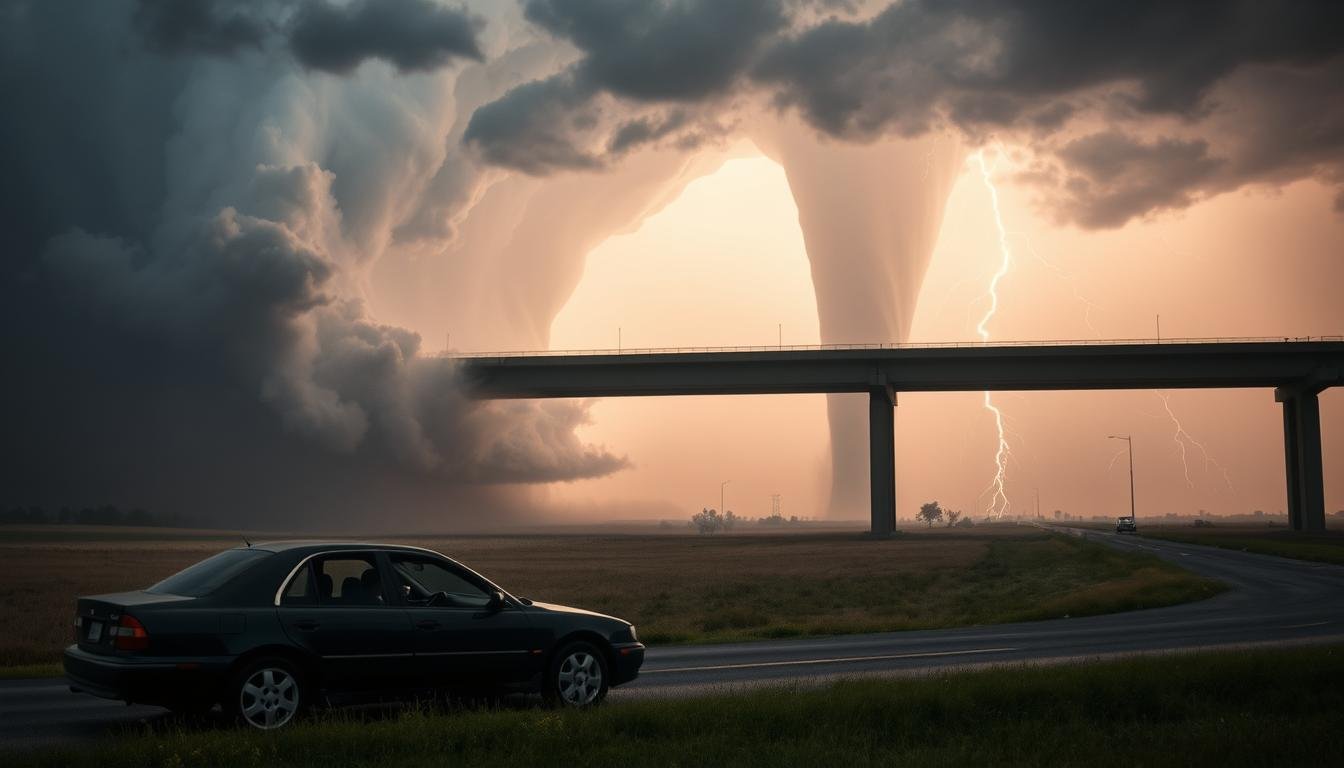

Avoid Underpasses During Tornado: When a tornado warning is issued, finding a safe place is your top priority. But not all shelters are safe. You might be surprised to learn that underpasses are not as safe as they seem.
Actually, seeking shelter under an underpass can be more dangerous than being in the open. The design of an underpass can make you more likely to get hurt or worse. This is because it creates a wind tunnel effect, making wind speeds and debris worse.
Knowing the dangers of underpasses is key to staying safe during tornadoes. As tornado season approaches, it’s important to know where to hide and what to avoid. This can save your life.
The Deadly Myth of Underpass Protection
Many people think underpasses keep them safe from tornadoes. But this is a dangerous myth. It’s not true and can lead to serious harm.
Underpasses are not safe places to hide from tornadoes. They can actually make things worse. The design of an underpass can make winds stronger and bring more debris.
When a tornado hits, it brings dangerous debris. Underpasses, being low, can trap this debris. Many studies and personal stories have shown that underpasses are not safe.
It’s important to know the dangers of underpasses during tornadoes. We need to teach people about safer places like basements or storm cellars. We must also warn them about the risks of underpasses.
Why Is an Underpass Dangerous During a Tornado?
Underpasses are not safe during tornadoes because of how tornadoes work. When a tornado hits an underpass, it changes the wind in a bad way. This makes it dangerous for anyone trying to hide there.
The main reason underpasses are risky is the wind tunnel effect. This happens when tornado winds go through the underpass. It makes the winds stronger and more full of debris.
Wind Tunnel Effect
The wind tunnel effect is key to understanding why underpasses are not safe. Winds get faster as they go through the narrow underpass. This makes the area even more dangerous for people trying to find shelter.
The table below shows how the wind tunnel effect makes underpasses dangerous during tornadoes:
| Factor | Description | Effect |
|---|---|---|
| Wind Speed | Increased due to funneling effect | Higher risk of injury from debris |
| Debris Density | More debris is funneled through | Increased risk of being struck |
| Air Pressure | Changes in air pressure can cause injuries | Risk of eardrum damage or being pulled into the tornado |
It’s important to know about the wind tunnel effect and its dangers. This knowledge helps us make better choices during tornadoes. It shows why we should look for safer places to hide.
The Science Behind Tornado Behavior Near Structures
Tornadoes act differently when they hit structures, which is important for knowing the dangers of underpasses. When a tornado gets close to a structure, many things affect how it behaves and hits the structure.
The way a tornado meets a structure like an underpass is complex. The wind speed and direction of the tornado change as it gets closer to the underpass. This can make the force on the structure stronger. Research shows that the shape of the underpass, like its height and width, greatly affects the wind flow around it.
Experts use advanced computer models to study how tornadoes and structures interact. These models help them see how different things, like the tornado’s strength and the structure’s design, affect the danger.
| Factor | Description | Impact on Tornado Behavior |
|---|---|---|
| Tornado Intensity | Measured on the Enhanced Fujita Scale (EF Scale) | Affects the destructive potential of the tornado |
| Structure Design | Includes geometry and construction materials | Influences wind flow patterns and structural resilience |
| Wind Direction | Changes as the tornado approaches the structure | Can increase or decrease the impact on the structure |
Knowing these factors is key to figuring out if underpasses are safe during tornadoes. By understanding the science of tornado behavior near structures, you can make better choices about where to hide during a tornado.
Documented Fatalities and Injuries at Underpasses
Underpasses are dangerous, especially during tornadoes. People often try to find shelter there, but it’s a bad idea. This choice can be deadly.
In 1999, Oklahoma saw a big tornado outbreak. Many people died at underpasses. Those who survived talked about the strong winds and flying debris.
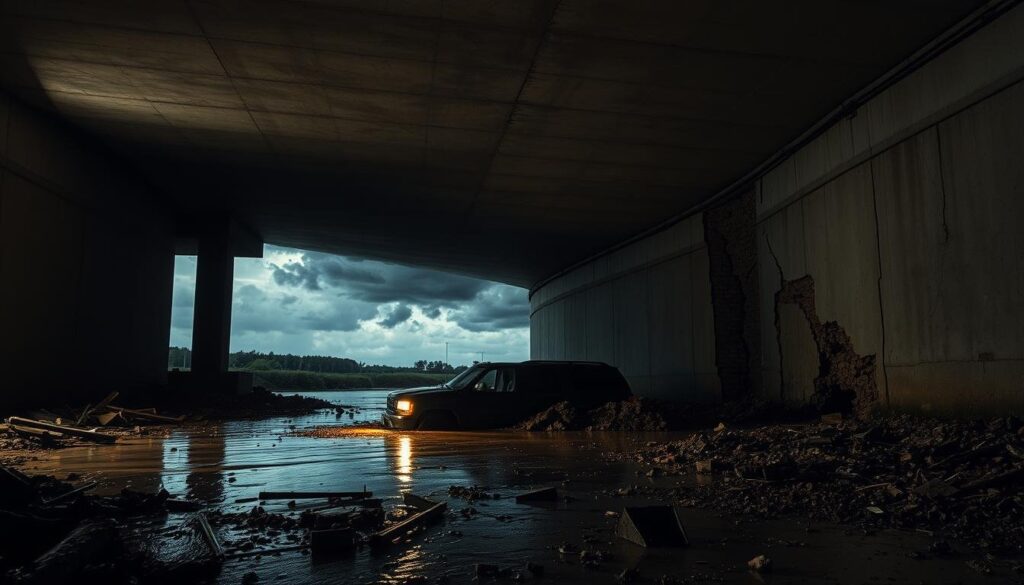
The Bridge Creek–Moore tornado in 1999 was especially deadly. It was an EF5 tornado. Many got hurt or died, some at underpasses. The winds were so strong and debris flew everywhere, making underpasses very dangerous.
Here are some key points:
- Many people died at underpasses in the 1999 Oklahoma tornado outbreak.
- Those who survived talked about being hit by debris and strong winds.
- The design of underpasses can make the wind tunnel effect worse, making them even more dangerous.
These stories show why you should not go to underpasses during tornadoes. It’s a bad choice that can lead to death. It’s important to find safer places to hide during tornadoes.
Safer Alternatives When Caught in a Tornado
When a tornado hits, knowing the safest places to go can save lives. You must act fast and make smart choices to keep yourself and your family safe.
First, look for a safe room or basement. These places are built to handle strong winds and flying objects. They offer the best protection against tornadoes.
- Keep up with weather news through a trusted source or app.
- Have a family plan for emergencies, including where to meet and how to leave.
- Practice your tornado drill often so everyone knows what to do.
If you’re in a mobile home, get out fast and find a strong building or shelter. Mobile homes are not safe during tornadoes, even if they’re tied down.
Consider getting a tornado safe room or storm shelter if you live in a tornado area. These are made to keep you safe during bad weather.
By knowing and using these safer options and practices, you can lower the risk of harm to yourself and your family during a tornado.
Conclusion: Avoid Underpasses During Tornado
When a tornado hits, quick decisions can save lives. You’ve learned that underpasses are not safe. They can actually be deadly.
Understanding tornado behavior and the dangers of underpasses is key. Knowing where to seek shelter, like a basement or storm cellar, is crucial. It can mean the difference between life and death.
By making smart choices during tornado threats, you can keep yourself and your loved ones safe. Stay informed, be prepared, and always prioritize tornado safety. This way, you can reduce the risks from these powerful storms.
See Also: Why the Sun is More Dangerous During an Eclipse?
FAQ
What is the wind tunnel effect in an underpass during a tornado?
The wind tunnel effect happens when an underpass funnels and speeds up tornado winds. This makes it more dangerous for people inside.
Are underpasses completely safe during any weather condition?
No, underpasses are not safe during tornadoes. The wind tunnel effect and other factors can make them very dangerous.
What are some best practices for tornado safety?
Good practices include having a plan for evacuating, staying away from windows and doors. Also, seek shelter in a safe room or area.
Can an underpass provide any protection during a tornado?
No, underpasses do not protect well during tornadoes. They can actually increase the risk of injury or death due to wind and debris.
How can I stay informed about tornado risks and safety?
To stay informed, sign up for emergency alerts. Also, follow weather reports and forecasts. Keep up with the latest research and guidelines on tornado safety.
Explore Why is San Luis Obispo Considered Dangerous? Insights.

Lorenzo Sloan is a safety advocate from Los Angeles who exposes hidden and everyday dangers through research-based blogging. With a background in social work, he aims to keep readers informed, cautious, and prepared for the unexpected risks around them.